
همین حالا تماس بگیرید!
پاسخ فوری و مشاوره رایگان در انتظار شماست.
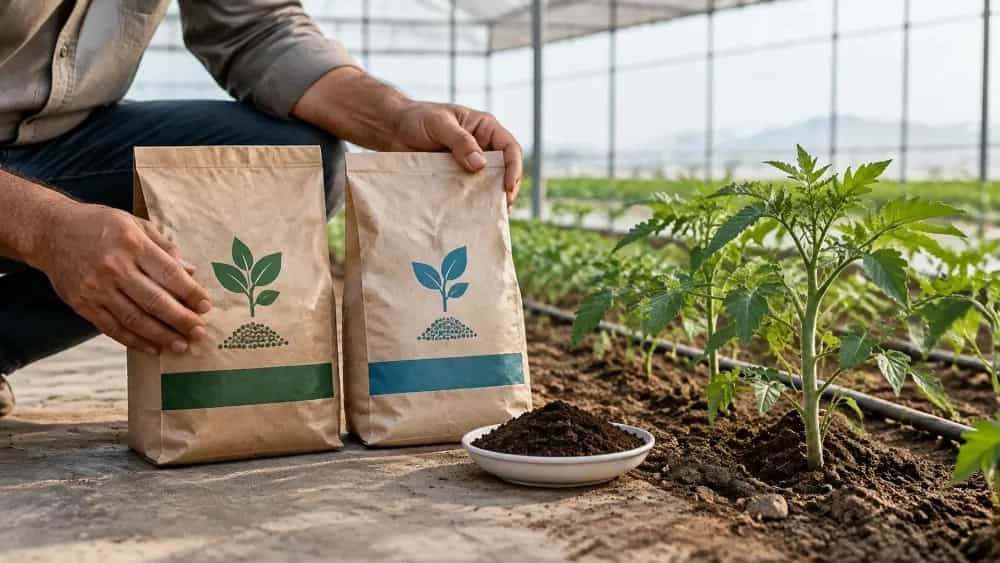
Two bags of fertilizer with the same name are in front of you; One is cheaper and the other has a salesperson who can explain the composition and how to use it. Which one is right for your plot or greenhouse? In a market like Karaj, the main issue is not just finding agricultural fertilizer sales center; You must make sure that the product you receive is both traceable and suitable for the actual needs of your cultivation. Even healthy and high-quality fertilizer will not be a good purchase if it is used at the wrong time or in the wrong amount.
Where can we buy high-quality and appropriate agricultural fertilizer?
Buy from a seller or supplier that provides product specifications, registration and labeling information, storage conditions, and a trackable invoice. Also, make the final selection based on product needs and soil test results, not just brand name, word of mouth, or lowest price.
This answer has two parts that should not be confused: Purchasing Path Validity and Fertilizer Suitability. The valid purchase route allows you to check the product identity, the declared composition and the terms of the transaction. The technical suitability determines whether the same product is the right choice for your soil, irrigation water, type of cultivation, growth stage and method of consumption.
A soil test is a more reliable starting point than guessing based on leaf color or another farm's experience. The test report shows the state of the soil in terms of nutrients; Its interpretation should be done along with the type of crop and cultivation conditions. A fertilizer recommendation that is suitable for another land may not necessarily be suitable for your greenhouse or garden.
Before paying, ask any fertilizer sales center these five questions:
- What exactly is the composition and amount of nutrients on the label?
- How can product registration information and the identity of the manufacturer or supplier be checked?
- For what method of consumption and what stage of growth is this fertilizer recommended?
- How have the packages been stored and are they healthy and with readable specifications?
- Weight, shipping cost, tax and delivery conditions are included in the announced price?
A seller who does not have a clear and verifiable answer to these questions is not a low-risk choice, even with a lower price offer.
What things determine the quality and suitability of fertilizer?
Fertilizer quality should be evaluated based on traceable identity, declared composition, packaging status and storage conditions. Its appropriateness also depends on the nutritional needs of the plant and the limitations of soil and water; None of them takes the place of the other by itself.
Label, composition and product tracking
The label should help you understand what substance you are buying, in what combination and under what conditions. If the product specification is illegible, ambiguous or inconsistent with the information provided by the seller, clarify the issue before purchasing.
In purchasing chemical fertilizer, N-P-K numbers show the weight percentage of nitrogen, phosphate and potash; For example, the 20-20-20 label means 20% nitrogen, 20% phosphate expressed as P₂O₅, and 20% potash expressed as K₂O, not 20% pure elemental phosphorus and potassium. This distinction is important when comparing two formulas or calculating dosage.
In addition to the composition, check the product name, net weight, manufacturer information, batch or shipment number if included, instructions for use, and storage conditions. Regarding the registration information, it is not enough to see a number on the package; Its specifications must match same product and same supplier. Valid international guidelines emphasize clear labeling, declaration of composition and provision of instructions for use and storage.
Soil requirement, water quality and consumption method
The right formula starts with your growing problem, not the vendor's product list. The result of the soil test, the type of plant, the growth stage, the quality of the irrigation water and the method of consumption determine which combination is more worth investigating.
For example, only the percentage of elements is not important in irrigation fertilization; You must make sure that the product is suitable for the intended irrigation method and has clear instructions for use. In foliar spraying, the amount of soil consumption cannot be easily transferred to the spray tank. If you see signs of nutrient deficiency, don't make the diagnosis based on the appearance of the plant alone; Root problems, watering or soil conditions may also play a role in your observation.
In the table below, match the selection criteria with the type of need:
Purchase status or intent | Option to check | Key question before purchase | Error Expensive |
Supply specific element based on soil test | Single element fertilizer or proportional formula | How much of the required element does it provide? | Purchase complete fertilizer without needing all its elements |
Multi-element nutrition program | Compound fertilizer with specific composition | Proportion of elements with technical advice of coordinated cultivation Is it? | Choose based solely on the bigger numbers on the package |
Use through irrigation | Suitable fertilizer for irrigation | What is the usage order and compatibility with the irrigation method? | Assuming that any fertilizer is suitable for entering the irrigation system |
Comparison of two sales offers | Product with specifications and delivery conditions Clear | What is the cost of each kilogram of the required element? | Comparison only the price of each bag, regardless of weight and composition |
The price of agricultural fertilizer becomes more accurate when you know how much you are paying for the required nutrient. If two products have different weights or concentrations, it is misleading to compare the price per package; In addition, you should also consider the cost of shipping and the possibility of the product remaining unused. Academic promotional guides also emphasize matching the composition with the soil test and paying attention to the actual amount of nutrients when choosing fertilizer.
Which mistakes cost more?
In my experience, the question "Which fertilizer is stronger?" Usually less than the question "Which nutrient are we lacking?" It helps to make the right decision. When considering an order, I first want to know what the crop is, what the latest soil test says and how the fertilizer is going to be applied; Then I go to the brand name and price.
In the discussions related to the supply and sale of agricultural fertilizer in Karaj, I consider three points to be critical for decision making:
- Purchasing before the need is clarified: When only the name of a formula is available and there is no information about cultivation or soil test, even a detailed comparison of several vendors will not solve the main problem. First, equalize the composition and weight, then go to the cost comparison.
- Disregarding the time and place of consumption: Buying the right product, without a proper consumption plan, is not a guarantee of its effective use. I recommend that you also specify the proposed method of consumption in writing before placing a bulk order.
There is a simple rule to control the decision: Right source, right amount, right time and right place. These four criteria in the guidelines for sustainable fertilizer management are also the basis for responsible use of plant nutrients; Therefore, shopping should not be seen separately from consumption plan.
Fertilizer purchase road map; From needs assessment to delivery
Reliable purchase begins with the definition of the need and ends with the control of the delivered goods. This shortcut prevents two common mistakes: ordering a mismatched product and accepting a product that does not match the agreed specifications.
1. Summarize the requirement in one sheet. Put together the type of crop, area under crop, growth stage, irrigation method and soil test result. If you don't have a test report, get help from an agricultural expert or an accredited laboratory about correct sampling and local interpretation; Merely having a laboratory number, without interpretation according to the product, is not a prescription.
2. Ask for recommended product specifications. Get ingredient composition, product form, application method, package weight, and label information instead of a general request for "good fertilizer." If you have several options in front of you, compare them against a fixed criterion: the quantity of the element required, the usability in your consumption method, and the final cost of delivery.
3. Match the identity of the product and the seller. Check the registration information and specifications on the package and ask for an invoice that clearly shows the product name, quantity, price and seller's identity. If the seller claims a special feature for the product, request a technical explanation or documentation of the same claim; General terms such as "suitable for all products" do not replace technical specifications.
4. Finalize delivery terms before bulk order. Agree on net weight, number of packages, shipping cost to destination, delivery time and handling of possible discrepancy. On significant orders, this clarity is as important as the discount on each bag.
5. Recheck the order upon delivery. Match the product name and composition, package health, weight and quantity with the invoice. If the package is damaged or the information is different from the order, please clarify the matter with the supplier before consumption.
At Aromaad company, which operates in the field of supplying, producing and selling all kinds of agricultural fertilizers in Karaj, I see the value of a technical discussion before purchase in this: first, the issue of precise cultivation should be stated, then the proposed product should be weighed against it. If you're still hesitating between several formulas, instead of asking for an instant recommendation, have soil, product, and application information ready for review.
