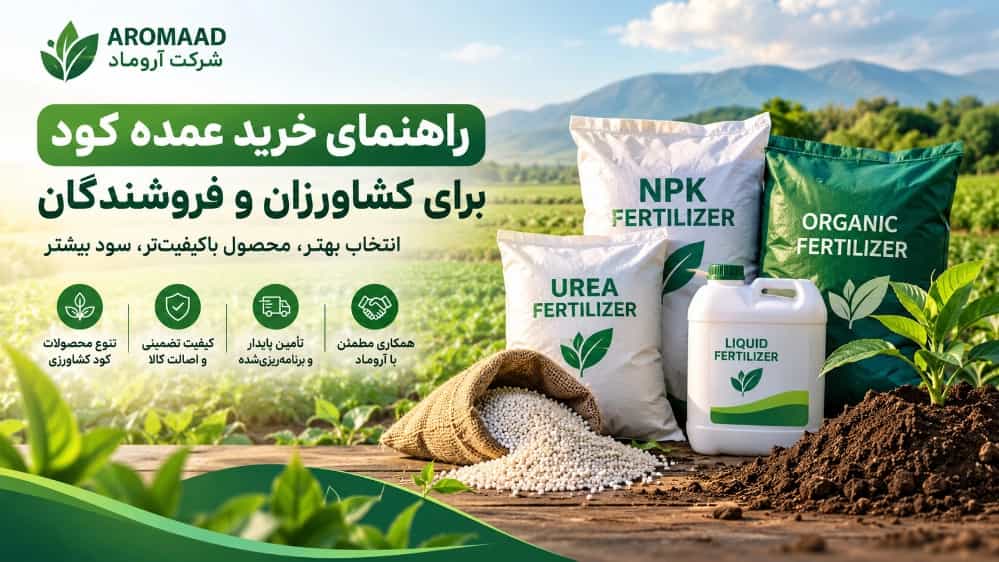
Successful agriculture depends on various factors such as choosing the right seeds, irrigation management, pest control, and supplying nutrients to plants. Among these factors, agricultural fertilizer plays an important role in plant growth, improving product quality and maintaining soil fertility. For this reason, bulk purchase of fertilizer is considered one of the important decisions for farmers, greenhouses, gardeners, agricultural input stores and distributors of agricultural products.
Choosing the right fertilizer and buying it from a reliable supplier can help manage costs, better planning for cultivation and access to the required inputs at the right time. On the other hand, improper purchase may increase production costs, difficult storage, or use a product that does not match the actual needs of the plant.
In this comprehensive guide, we examine the most important points related to the bulk purchase of fertilizer, types of agricultural fertilizers, factors affecting the price, quality assessment method and criteria for choosing the right supplier. You will also get to know the role of Aromaad company in the supply and procurement of agricultural inputs so that you can make a more informed decision about your purchase.
Why bulk purchase of fertilizer is important for farmers and sellers?
Mass purchase of fertilizer does not only mean obtaining a large volume of a product; Rather, it is a solution for better resource management, reducing side costs and creating order in the supply chain of agricultural inputs. When the farmer or seller determines their needs in advance, it will be possible to plan more precisely to supply the required products.
Reduction of purchase and transportation costs
One of the most important reasons for paying attention to the wholesale purchase of fertilizer is the possibility of receiving a more suitable price for bulk orders. Many suppliers price based on order quantity, product type, payment terms and shipping cost. Therefore, planned purchasing can reduce the total cost of each product unit.
More reliable access to required inputs
The need of plants for nutrients changes in different stages of growth. For example, some crops need a balanced supply of nitrogen, phosphorus and other elements in the early stages of growth, while in the later stages, the nutrition program should be adjusted based on the type of plant and the production goal.
By planning to buy fertilizer in bulk, farmers can get the inventory they need before the start of the growing season or at the right time. This issue is also important for sellers of agricultural inputs; Because inventory management helps them better respond to customer demand.
Improving financial management and warehouse inventory
Buying without a plan may result in repeat orders, increased shipping costs, or sudden product shortages. On the other hand, determining the amount of consumption and the time of the order allows for a more accurate forecast of costs.
However, the purchase volume should be proportional to the warehouse capacity and the amount of consumption. Buying more than you need, especially for products that are sensitive to moisture, heat or improper storage conditions, can create financial risk.
Types of agricultural fertilizers that you should know before bulk purchase
Before purchasing fertilizer in bulk, it is necessary to know the difference between different groups of fertilizers and the use of each one. Choosing the right product should be done based on soil testing, type of cultivation, plant growth stage, climatic conditions and irrigation method.
Nitrogen fertilizers
Nitrogen is one of the essential elements for plant growth and plays a role in building proteins and chlorophyll. Nitrogen fertilizers are usually used to supply this element.
The amount and time of consumption of these fertilizers should be determined according to the needs of the product and the characteristics of the soil. Excessive use of nitrogen may cause unbalanced vegetative growth, increase the sensitivity of some plants to diseases or reduce the efficiency of resource use.
Farmers should pay attention to the percentage of nutrients, chemical form, storage conditions and compatibility of the product with the farm fertilizer program when buying bulk nitrogen fertilizer.
Phosphate fertilizers
Phosphorus plays a role in the processes of energy transfer, root growth and the initial stages of plant establishment. Phosphate fertilizers are used in many plant nutrition programs to provide this element.
The level of phosphorus availability for the plant depends on the characteristics of the soil, including its acidity and mineral compounds. Therefore, the choice of phosphate fertilizer should be done considering the farm conditions.
Potassium fertilizers
Potassium plays an important role in regulating plant physiological activities, water management and some quality characteristics of the product. In many horticultural and agricultural products, adequate supply of potassium can be part of the nutritional management program.
At the time of bulk purchase of potassium fertilizer, the type of composition, the percentage of usable potassium, the sensitivity of the product to salinity, and water and soil conditions should be checked.
Complete and combined fertilizers
Complete fertilizers usually provide a few key nutrients in a single crop. Different formulations of these fertilizers are designed for different growth conditions and stages.
For example, a formula with more phosphorus may be appropriate for a particular application, but not necessarily the best choice for all plants or all growth stages. Checking the ratio of the elements included on the package and matching it with the actual needs of the plant is one of the important principles of bulk purchase of compound fertilizer.
Organic and biological fertilizers
Organic fertilizers are prepared from sources such as plant and animal processed materials. These products, depending on the composition and processing quality, can help improve some physical and biological characteristics of the soil.
Biological fertilizers are also produced for specific applications using beneficial microorganisms and specific biological mechanisms. Storage conditions, production and expiration dates, the viability of microorganisms and instructions for use are particularly important in these products.
In choosing this group of products, it is necessary to ensure the quality of processing, safety, ingredients and compatibility with the cultivation system.
The most important criteria for bulk purchase of high-quality fertilizer
In order for the bulk purchase of fertilizer to become a suitable economic and technical decision, it is necessary to check several key criteria before placing an order.
1. Examination of compositions and technical specifications
The first step is to study the product label and its technical specifications. The percentage of food elements, the type of compounds, the ability to dissolve, the limits of consumption and the method of use are some of the information that should be checked.
In liquid fertilizers, the concentration and physical characteristics of the product are important. In water-soluble fertilizers, the amount of dissolution and the possibility of sediment formation should be evaluated according to the method of consumption.
2. Attention to product authenticity and product documentation
In the market of agricultural inputs, it is very important to check the authenticity of the product and the documents provided. The wholesale buyer should ask the supplier about the manufacturer's information, batch number or production series, production date, expiration date if applicable, technical specifications sheet and necessary legal documents.
This review is more important for sellers who provide the product to end customers; Because the credibility of the store depends to a large extent on the quality and traceability of the supplied goods.
3. Comparison of price and final cost
In checking the bulk purchase price of fertilizer, don't just settle for the amount listed in the pre-invoice. The cost of shipping, packaging, unloading, insurance if any, payment terms and order amount can affect the final cost.
For an accurate comparison, it is better to inquire from several suppliers with the same technical specifications. Comparing two different products based solely on the price per bag may be misleading.
4. Evaluation of packaging and storage conditions
Appropriate packaging should protect the product against moisture, pollution and physical damage. When delivering the order, check the health of the packages, the readability of the information on the label, and the conformity of the number and weight of the goods with the order.
Also, the storage conditions of each type of fertilizer must be observed. Some products need a dry and cool environment, and others should be kept away from direct sunlight or conditions that damage their ingredients.
5. Supplier credit check
A suitable supplier should be able to provide clear and verifiable information about products, terms of sale, delivery time and how to handle possible discrepancies.
In the process of bulk purchase of fertilizer, proper response, transparency in the pre-invoice and clarity of the obligations of the parties can prevent many problems.
Factors affecting the bulk purchase price of fertilizer
The price of agricultural fertilizer is influenced by many factors and it is not possible to consider a fixed rate for all products. Knowing these factors helps the buyer to better evaluate the offered prices.
Fertilizer type and formulation
Different fertilizers differ from each other in terms of raw materials, production process, concentration of nutrients and technical characteristics. As a result, their prices are also different.
Specialized products or with special formulations may cost more; However, the fact that the product is more expensive alone does not indicate that it is more suitable for a farm.
Order volume
In many trades, the order quantity affects the unit price. Larger orders may have different sales terms, but this depends on the seller's policy and delivery charges.
The best way is to get the price of several order levels before finalizing the bulk purchase of fertilizer and compare them with the actual consumption and storage capacity.
Shipping cost and geographic location
The distance between the supplier's warehouse and the delivery location, the type of transport, the weight of the cargo and the unloading conditions are important factors in determining the final cost.
For bulk orders, prior arrangement of delivery location, shipping time and unloading responsibility can avoid unexpected costs.
Market conditions and time of purchase
The price of raw materials, exchange rate for import-dependent products, energy cost, production conditions and the amount of supply and demand can affect the price of fertilizer.
Therefore, it is better for buyers to get a direct and up-to-date inquiry to know the price of the day and not to base their decision solely on old prices or informal information.
Fertilizer wholesale purchase guide for farmers
Farmers should coordinate their purchases with the crop nutrition program. The first step is to determine the real needs of the farm. Soil testing and, if needed, water and plant tissue testing can provide useful information about the state of nutrients.
After determining the needs, the approximate amount of each type of fertilizer, the time of use and the number of applications are determined. This program helps the farmer avoid buying products that have no specific use in the farm.
In the next step, the amount of consumption should be calculated in the cultivated area. For example, if the fertilizer program recommends a specific amount of a crop for each hectare, the amount needed for the whole field is obtained by multiplying the application amount by the number of hectares. Of course, this calculation must be in accordance with the expert advice and instructions for using the product.
Finally, the farmer should consider the bulk purchase cost of fertilizer along with the expected yield, quality of the final product, and ancillary costs. The main goal is to provide a balanced supply of nutrients to the plant, not simply to use more fertilizer or choose the cheapest option available.
Fertilizer bulk purchase guide for sellers and distributors
For agricultural input stores and distributors, buying bulk fertilizer is a part of business management in addition to the technical aspect. The seller must be able to provide products that match the needs of customers in the region, the cultivation conditions and the level of demand.
Knowing the target market
The mix of top selling products in each region may be different. For example, the needs of greenhouses are not the same as those of gardeners or crop farmers. Examining customers, types of common crops, and peak demand times will help determine the appropriate inventory mix.
Inventory management and circulation of goods
Buying high volume is beneficial only when the product is sold at the right time and the cost of holding it does not increase too much. Sellers must balance order quantity, inventory turnover rate, warehouse space, and available capital.
For products that have an expiration date or are sensitive to environmental conditions, inventory management based on production date, expiration, and storage conditions is particularly important.
Calculation of real profit
To determine the selling price, purchase cost, transportation, warehousing, packaging if any, operational costs and risk of capital sleep should be considered. A bulk purchase discount is valuable when it generates a decent profit margin after accounting for all costs.
Also, the seller must provide the product information correctly to the customer and refrain from making unsubstantiated claims about the increase in performance or the definitive effect of the fertilizer on the product.
Why cooperation with Aromaad company can be important in the fertilizer supply program?
Choosing the right supplier is one of the most important parts of the bulk fertilizer purchase process. In addition to price, farmers and sellers pay attention to product information, transparency of order conditions, and the possibility of planning to meet their needs.
Aromaad Company can be a starting point for customers who plan to plan their purchase more carefully in introducing and reviewing agricultural input supply options. When evaluating cooperation with this company, it is recommended to directly inquire about the required products, technical specifications, daily price and delivery terms.
Expected benefits from a good supply chain partnership
When negotiating with Aromaad or any other supplier, it is best to check the following criteria:
- Transparency in pricing: Receive a pre-invoice with the type of product, order amount and related costs.
- Presentation of product specifications: Ability to check the ingredients, uses, instructions for use and quality documentation related to each product.
- Planning for major orders: Specifying the minimum order quantity, preparation time and shipping conditions.
- Responding to Buyers: Get enough information to compare products and choose the option that suits your real needs.
- Pay attention to authenticity and quality: Check the necessary documents and match the delivered product with the order information.
These criteria help buyers to shape their cooperation with Aromaad based on clear information and clear expectations. Note that the type of products available, inventory, terms of sale and services provided must be inquired directly from the company; Because without checking the official information, it is not possible to make a definite claim about the availability or definitive features of its services.
How to purchase bulk fertilizer from Arumaaad?
To start, specify your need in detail. The type of product, required quantity, delivery location and approximate time of receiving the order are the most important information that you should have ready.
Then ask Aromaad about the products related to your needs, technical specifications, daily price, minimum order quantity and shipping cost. If there are several alternative products, ask the seller to explain the difference in their composition and use so that your comparison is based on technical information.
In the final step, check the pre-invoice and delivery conditions. Before paying, make sure that the specifications of the product match your needs, that the settlement conditions are clear, and that the responsibilities of the parties are clear.
This approach makes the bulk purchase process of fertilizer more regular for farmers and sellers and enables more economical decision making.
The final checklist before placing an order for bulk purchase of fertilizer
To make the ordering process more accurate, please check the following before finalizing your purchase:
- The type and amount of fertilizer required have been determined.
- Technical specifications and product compositions have been checked.
- The authenticity of the goods and related documents have been evaluated.
- The daily price and terms of payment have been clearly received.
- The cost of transportation and unloading has been calculated. are specified in the order.
- The conditions for dealing with possible discrepancies or damage are clear.
- The product is compatible with the plant nutrition program and expert recommendations.
Using this checklist will help farmers, stores and distributors make decisions based on technical and economic criteria.
Summary: Smart purchase of fertilizer with careful planning
Mass purchase of fertilizer is one of the important decisions in managing agricultural costs and providing market inputs. Choosing the right product, checking the technical specifications, evaluating the authenticity of the product, comparing the final price and planning for maintenance, all play a role in the success of this process.
Farmers should choose the fertilizer they need according to the soil conditions, the type of product and the feeding program; While sellers and distributors have to coordinate the amount of orders with market demand, working capital and warehouse capacity.
In this way, checking the supply options and receiving clear information from Aromaad Company can be a part of your decision making process. Before placing an order, inquire directly about product specifications, daily prices, and sales conditions, and compare the available options to make a purchase that fits your needs and budget.
For a successful purchase, don't just pay attention to the low price; Prioritize quality, product suitability, product authenticity, and supplier reliability. Such an approach can help to better manage resources, reduce purchasing risk, and plan more effectively for the production and sale of agricultural products.